Skip to content
GAMAG
  • Home
  • About us
    • About us
    • Governance
  • News
  • Calendar
  • Resources
  • Members
  • Contact Us

News

News

8. Triple Jeopardy: A Trade Union Perspective on Gender-Based…

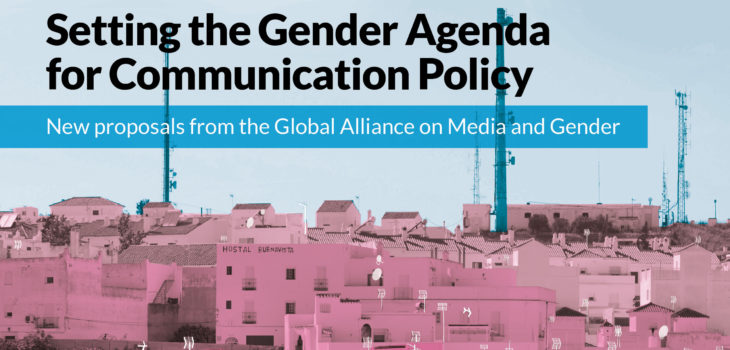
SETTING THE GENDER AGENDA FOR COMMUNICATION POLICY

Triple Jeopardy: A Trade Union Perspective on Gender-Based Violence against Women Journalists

Mindy Ran

In 1992, the Committee on the Elimination of All Forms of Discrimination against Women (CEDAW, United Nations, 1992) adopted General Recommendation 19 which explains that the prohibition of gender based discrimination includes violence. State parties to CEDAW must take all the necessary measures to eliminate violence, including legal sanctions, civil remedies, preventative measures, (such as public information and education campaigns) and protective measures (such as support services for women and girls who have experienced violence). 

Read more. Chapter-8Download

News

7. Violence Against Women Journalists – Online and Offline

SETTING THE GENDER AGENDA FOR COMMUNICATION POLICY

Violence Against Women Journalists – Online and Offline

Julie Posetti and Hannah Storm

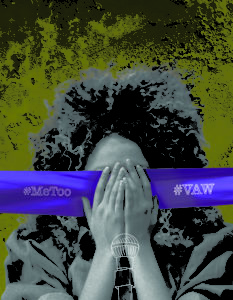
Women journalists face disproportionate risk and experience of violence and intimidation for the work they do – both on and offline. They are affected as members of a profession that is increasingly becoming a target in conflicts, in the context of terrorism, and as a feature of the rising global tide of populist politics. They are vilified and attacked for the messages they share and questions they ask. In some cases, they are even targeted for daring to speak at all. In addition to the risks and threats experienced by their male counterparts, they are also exposed to gender-based harassment and violence in the field and in the newsroom. Such attacks can be physical or virtual in nature, and they are frequently sexualized. 

Read more. Chapter-7Download

News

1. The Challenge of Mainstreaming Gender Through Media and…

SETTING THE GENDER AGENDA FOR COMMUNICATION POLICY

The Challenge of Mainstreaming Gender Through Media and ICT Policy and Regulation

Claudia Padovani

Many initiatives and advocacy interventions have been implemented over the years to address gender inequalities in the media, but unless those efforts are properly embedded within policy frameworks and agreements, their effects are likely to be scattered and their impact is likely to be weakened. 

Read more. Chapter 1Download

News

6. Violence Against Women in Media and Digital Contents

SETTING THE GENDER AGENDA FOR COMMUNICATION POLICY

Violence Against Women in Media and Digital Contents

Aimée Vega Montiel

Defined by the Convention on the Elimination of All Forms of Discrimination Against Women (CEDAW), adopted in 1979 by the UN General Assembly, as any distinction, exclusion or restriction made on the basis of sex which has the effect or purpose of impairing or nullifying the recognition, enjoyment or exercise by women, irrespective of their marital status, on a basis of equality of men and women, of human rights and fundamental freedoms in the political, economic, social, cultural, civil or any other field, violence against women (VAW) constitutes the main obstacle for women’s human rights. 

Read more. Chapter-6Download
News

5. Addressing Gender Issues in Media Content

SETTING THE GENDER AGENDA FOR COMMUNICATION POLICY

Addressing Gender Issues in Media Content

Sarah Macharia

In 1995, governments participating in the Fourth World Conference on Women in Beijing reached consensus on specific strategic objectives and related actions to advance equality, development and peace for all women. One objective – to “promote a balanced and non-stereotyped portrayal of women in the media” (Section J on “women and the media”, Beijing Platform for Action, 2015) – listed several actions, inter alia, promoting research and implementing an information, education and communication strategy, encouraging the media to refrain from exploitation, sexualisation and commodification of women, and promoting the idea that sexist stereotypes in media are gender discriminatory, degrading and offensive. 

Read more. Chapter-5Download

Posts pagination

Previous page 1 … 17 18 19 20 21 Next page

Recent Posts

  • Women’s Human Rights, Gender Equality and AI STATEMENT & CALL TO ACTION[1]
  • Gender and news: The 30-year journey
  • Safeguarding Women’s Communication Rights
  • EJES DEL DEBATE PARA LA REGULACIÓN DE LA VIOLENCIA SOCIODIGITAL
  • GAMAG contributes to Inter-American Model Law to address online violence against women

Archives

  • July 2026
  • December 2025
  • April 2025
  • March 2025
  • February 2025
  • June 2024
  • March 2024
  • January 2024
  • November 2023
  • October 2023
  • July 2023
  • June 2023
  • February 2023
  • October 2022
  • August 2022
  • July 2022
  • June 2022
  • May 2022
  • March 2022
  • February 2022
  • November 2021
  • October 2021
  • September 2021
  • August 2021
  • July 2021
  • June 2021
  • May 2021
  • March 2021
  • February 2021
  • January 2021
  • December 2020
  • November 2020
  • October 2020
  • September 2020
  • August 2020
  • June 2020
  • March 2020
  • January 2020
  • December 2019
  • November 2019
  • July 2019
  • May 2019
  • February 2019
  • December 2018
  • November 2018
  • March 2018
  • February 2018
  • January 2018
Theme by Colorlib Powered by WordPress
Back to top